
There is nothing like a war memorial to make me pause my frivolous travels and tourism activities. Unfortunately for many Australian families, the island of Borneo holds only sad memories for them of atrocity and lives lost in World War 2.
It is only right and proper to walk quietly and reflect on the sacrifice made by so many Australian men and women allowing Australia to be the free and democratic country we know and love today.
It’s time for a short history lesson…


In World War 2, the Japanese had their sights on dominating all of Asia and quickly overran numerous under-prepared South-East Asian countries, including Malaysia. As part of their plan, they transported a large number of English, New Zealand and Australian prisoners of war to a site near the then village of Sandakan in North-East Borneo. The Japanese wanted to build a runway to help them maintain supplies of armaments etc to their troops and naturally, prisoners were a cheap source of labour. They were even cheaper if you didn’t bother to go to the expense of actually feeding them.
Eventually, more than 2,434 prisoners were moved to Sandakan from other parts of Asia where they commenced a life of misery, cruelty and depravation. Of those 2,434 men, only six survived and they represented the very few successful escape attempts. The rest of the men died of starvation, disease or were simply executed.

The last cruel acts were a series of marches, now known as the Sandakan Death Marches. The tide of the war eventually turned in favour of the Allies and the Japanese decided to move their camp from Sandakan to a highly remote location near Ranau, central Sabah. There were no roads or infrastructure to transport their food and equipment so they forced the prisoners to carry huge weights on their backs for 260km. Can you imagine doing this? You are suffering from malnutrition and disease, walking in extreme heat and humidity over mountainous terrain? I like to think I am pretty resilient, but not in my wildest dreams could I do this. With their bodies and spirits broken, many men just sat down and gave up living.
As part of our trip to Borneo, our tour included visits to two war memorials and while the contrast between the two sites was stark, they was no less powerful.
Kundasang War Memorial Park

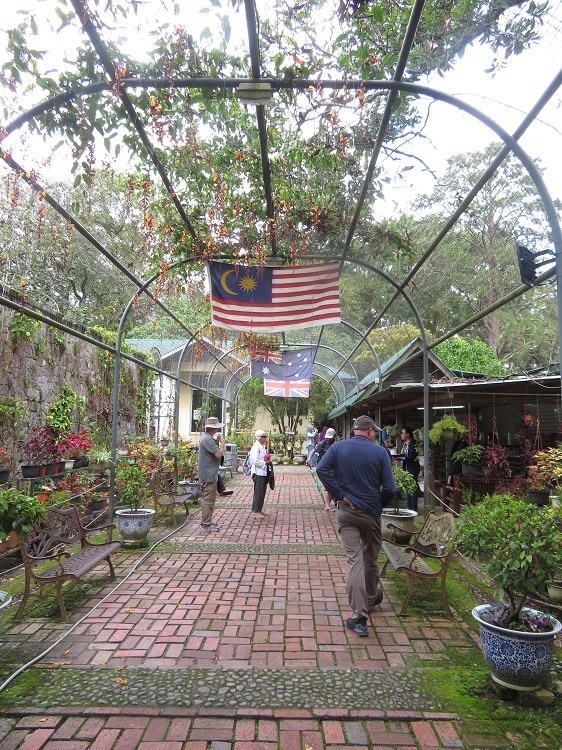


- A community-minded man, passionate about acknowledging this part of Malaysia’s history, decided to build a privately-funded memorial commemorating the sacrifice of both the local people and international soldiers.
- The location of this war memorial is a little unusual as the Death Marches pulled up short about 15km to the East, at the small village of Ranau.
- The Memorial covers quite a large area, although you wouldn’t know it was there unless someone pointed it out to you.
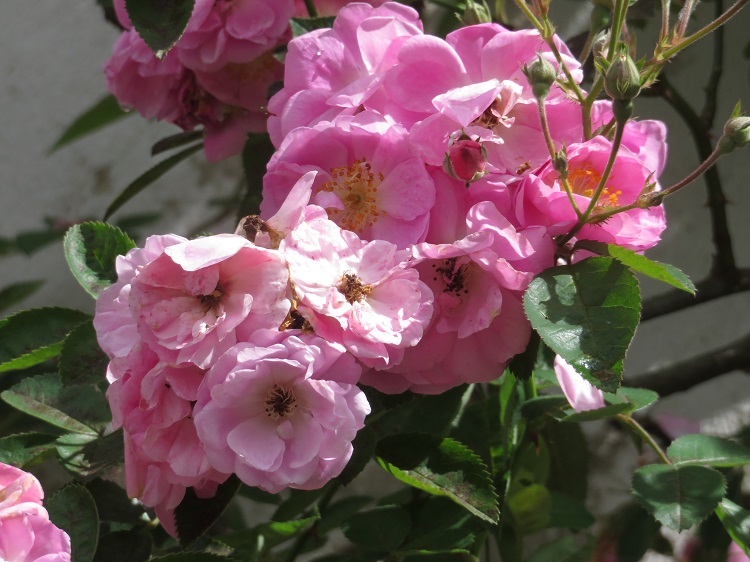
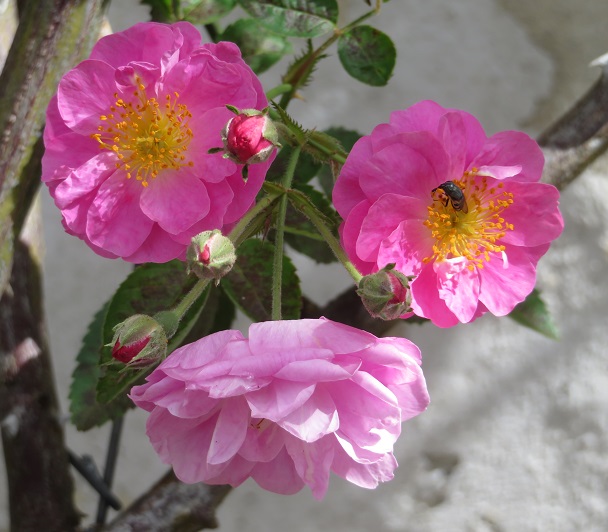
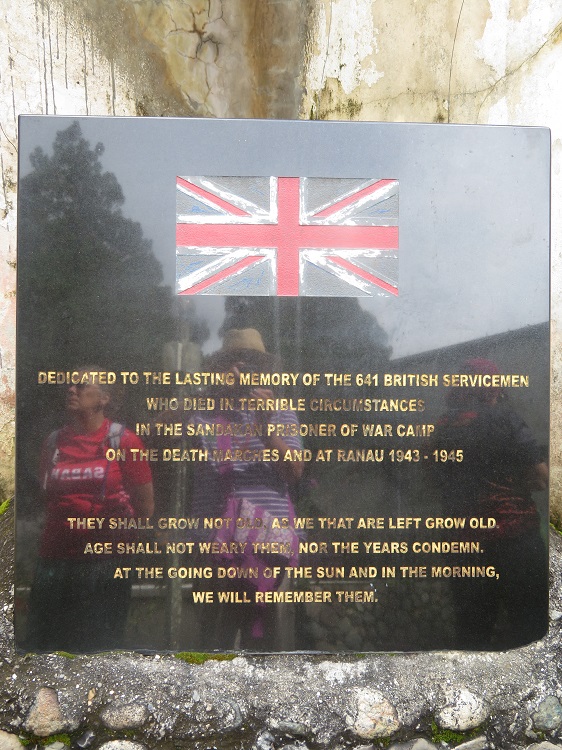
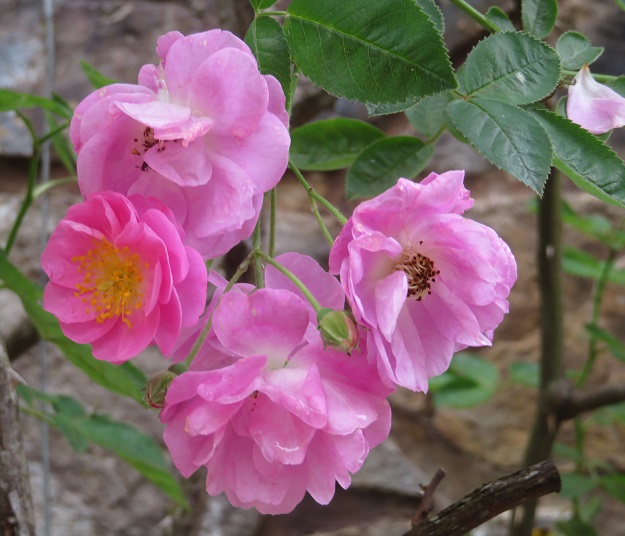

- There are individual gardens representing the different nationalities who fought in the war, as well as a small food and souvenir outlet.
- To increase your understanding, it is useful to watch a recording of an Australian current affairs TV show outlining this theatre of the war. Also off to the side of this conference room is a large amount of military memorabilia and media articles.

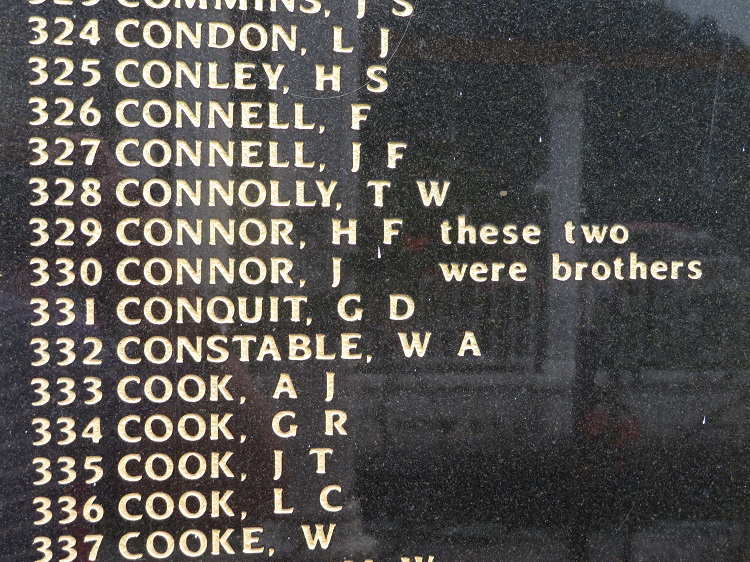

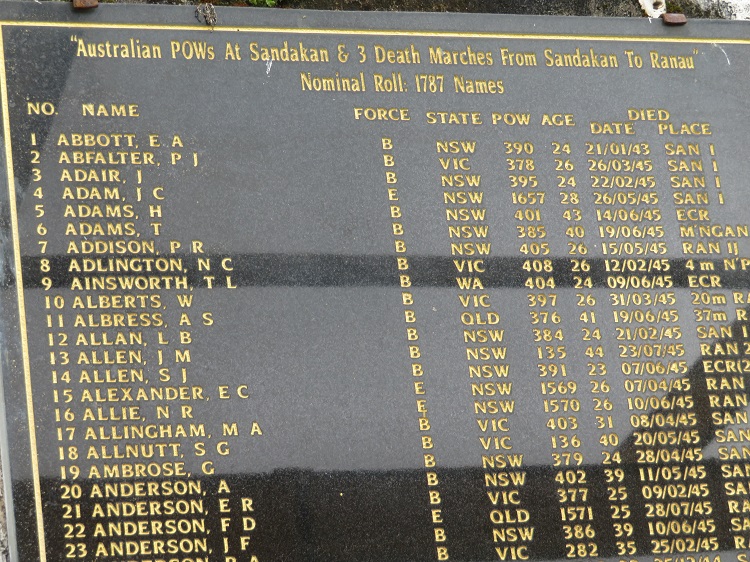
- This Memorial is a little unloved, well actually a lot unloved, as they rely on donations and a small entrance fee to keep their doors open.
- A steady stream of Malaysian visitors came through the gates and I couldn’t help but wonder what they think of this site. Is it still relevant and impactful for them too?


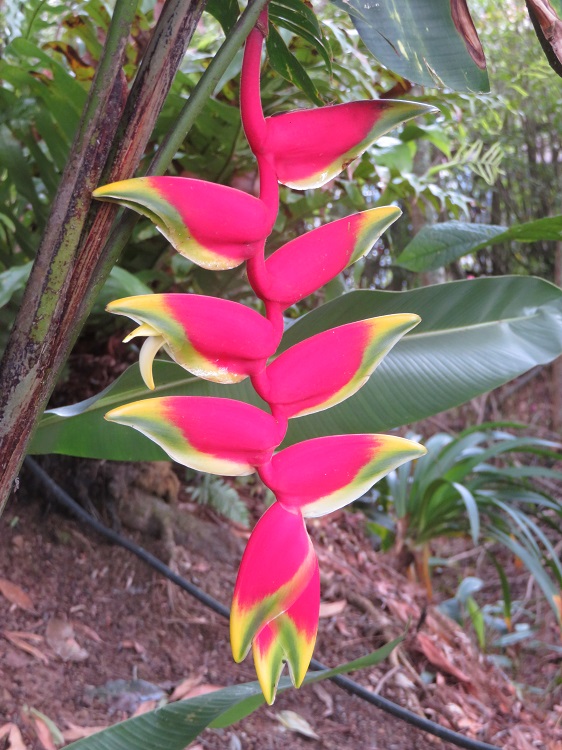


Sandakan Memorial Park
- And then you travel cross-country to Sandakan itself and the site of the original prisoner of war camp. The contrast could not be starker. This Memorial is funded by both the Malaysian and Australian governments, and the sense of order and façade of beauty created here does little to hide its history of cruelty.

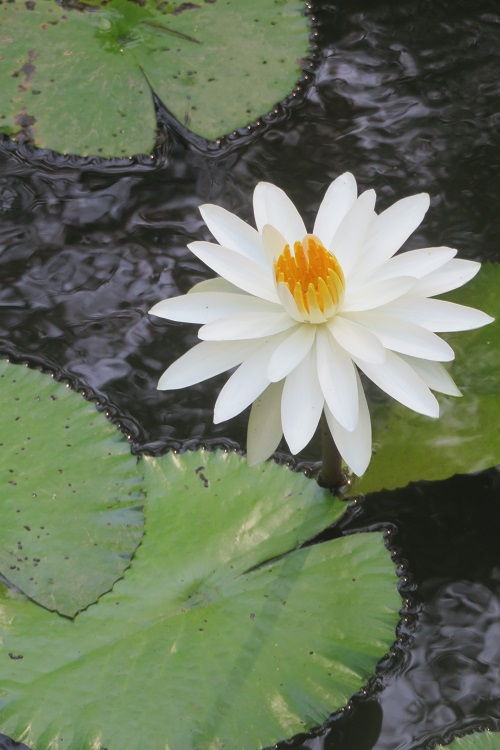
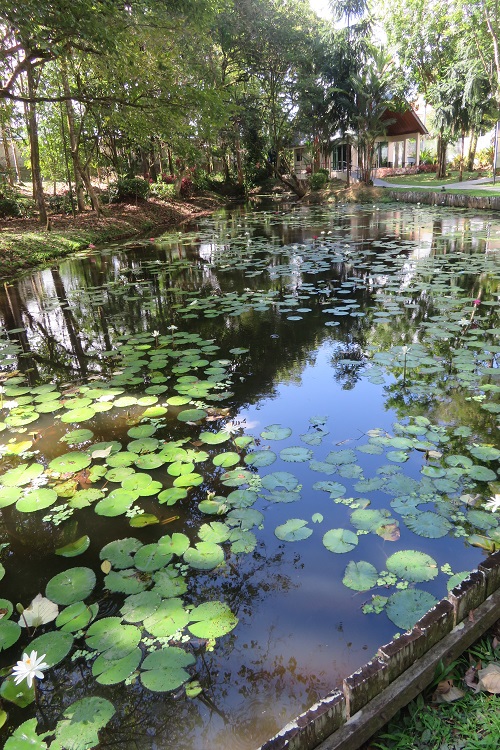

- I admit that our visit to this Memorial really knocked the wind out my sails. It is such a powerful place of reflection and solitude, and for me, overwhelming sadness:
- Sadness at the senseless loss of life and opportunity
- Sadness at the futility of it all
- Sadness at the cruelty
- Sadness at the simple lack of respect for your fellow man
- Sadness that anyone could think that this was a right and fair way to act.


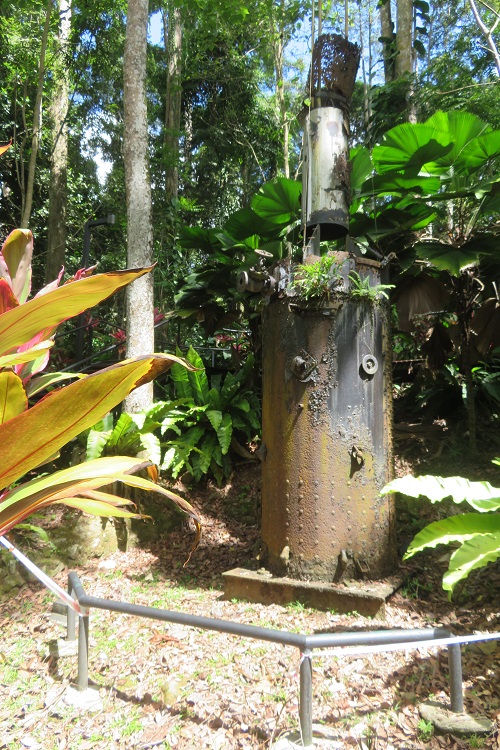

It is hard not to hate a whole nation when you visit places like this, but that’s what starts wars in the first place.
I think the hardest part for any family must be the ‘never knowing’. So many men were never found and their lives and souls were simply swallowed up by the soil of this beautiful country. ANZAC Day commemorations must be very moving here and I am tempted to return to Sandakan one day to pay my respects.


I don’t believe that history has given enough attention to the Asian sphere of the war. Not to celebrate it or promote it, but acknowledgement is important in the vain hope that we don’t repeat the same mistakes again.
Will we ever learn?
The Basics
What: The Kundasang Memorial has a small entrance fee for both locals and international visitors – around AUD$5 per person for foreigners. The Sandakan Memorial is free to enter.
Where: Kundasang Memorial is located at Jalan Kundasang Kauluan and the Sandakan Memorial can be found at 90702, Jalan Labuk, 90000 Sandakan.
When: Kundasang Memorial is open 830am-5pm every day and the Sandakan Memorial is open 8am-5pm every day.
Why: To pause, pay respect and consider the quality of the life we live today.
How: I did not see any public transport near these memorials, but they may be located nearby. Otherwise, you will need to arrange private transport or join a tour.
Who: Everyone from every nation can learn from past mistakes.
Related Posts: Another powerful war memorial is at Pearl Harbour at Hawaii. Words escape me.
Related Blogs: This Malaysian blog gives a very comprehensive round up of the Sandakan War Memorial
Read About it: If you have a burning interest in WWII history or want to find out more, grab a copy of Paul Ham’s book simply called Sandakan. It is a sobering, frightening, and heart-breaking read. Available from Fishpond.
I visited the Sandakan Death March memorials in early March 2023.
#sabah #warmemorials #travelinspo #worldwar2 #Sandakan #sandakandeathmarch #war #warcrimes #Borneo #warhistory #kundasangwarmemorial #ranau
 Life...one big adventure
Thanks for the excellent post. We have a small memorial to the death marches in Maitland NSW and I’ve read a bit about them, but being there and seeing the conditions would add a whole new level of understanding to what they went through. Thanks for sharing. Shaun
LikeLiked by 1 person
My pleasure. Even though I visited many months ago and have had another major adventure since then, this place still resonates with me. It is that powerful.
LikeLiked by 1 person
Two spiritual journeys in such a short space of time. Places like this will always stay in your memory.
LikeLiked by 2 people
It is rare and special when something like this touches your very core.
LikeLiked by 1 person
Aw Mel. Sheesh. What a beautiful post about despicable history. Wars are cruel. My son just finished high level history based on wars. I’m going to chat about this with him.
LikeLiked by 1 person
It seems that in any war any sense of humanity goes out the window and unfortunately, as the people of Ukraine will attest to, nothing has changed.
LikeLiked by 1 person
Nope and not while all the seats of power are occupied by men.
LikeLiked by 1 person
Truth!
LikeLiked by 1 person
Something I know nothing about, Mel. It’s inconceivable sometimes how we treat each other and just what we are capable of, isn’t it? Survival of the fittest but who could ever think that this was a proper way to treat anyone. Thanks for the poignant reminder.
LikeLiked by 1 person
I am surprised, Jo. I would have thought that this piece of history would be covered in the British school’s curriculum as so many British men died too. Yes, hard to believe the depths man will plunge to all in the name of ‘war’.
LikeLike
We mostly did European history when I was at school, Mel- a long time ago!
LikeLiked by 1 person
Same here and we focused mostly on English history, very little of our own, especially Indigenous history. Thankfully that has been rectified now, I understand…
LikeLiked by 1 person
I didn’t know this part of history, thanks for sharing with us. Maggie
LikeLiked by 1 person
Sorry it wasn’t a happier post. It is still worth visiting though. Mel
LikeLike
Wow, this is a beautiful post on something so utterly horrific. It makes me so sad how badly humans treat each other and continue to do so
LikeLiked by 1 person
Yep, the more things change, the more they stay the same, unfortunately.
LikeLike
This is a part of history we did not know about. Thanks for the education.
LikeLiked by 1 person
My pleasure, however I wish it was something that I couldn’t post about.
LikeLike
War … what comes with it, is just so sad. This is always a hard read for me and like other comments here, I also didn’t know about this part of history. But thanks for telling the story and reminding us of what these men had to endure. And thank you for your “soft touch” to the post with lovely flowers – I think it’s actually very appropriate.
LikeLiked by 1 person
That’s my pleasure. Thank you for your kind words. x
LikeLiked by 1 person
We just finished watching The Pacific (sister series of Band of Brothers) and it was so tough to watch at certain points (really well done in general, though, like B of B). The husband takes a particular interest in miliary/war history and agrees the the Pacific campaign was both decidedly more brutal than the European theater as well as much less talked about/known.
LikeLiked by 1 person
We all have so much to be thankful for and must never lose sight of the sacrifices made by others for our freedom. How different things could have been…
LikeLiked by 1 person
Sandakan Death March, a very interesting article however a few points I would like to raise. The 6 survivors were only from the death march. There were escapes from Sandakan, in 1943 officers and senior NCO were sent to Kuching, a lot of these fellows eventually came home.There are other relevant memorials in Ranau. No1 p o w camp memorial situated in the grounds of the SIB Church. This memorial, on the main Sandakan / Ranau road, is situated on the exact site of No1 p o w camp where a gallery depicts several events, of the period. Eg. Where Albert Cleary was so horribly treated, his mate Wally Crease shot while attempting escape, from where the infamous Rice Carring commenced, stories of local people attempting to help the prisoners, artefacts collected from the surrounding area. A note to add, toilet facilities have also been installed on site. No 2 jungle pow camp site, overlooking the last pow camp where the last of the prisoners were murdered, after the war had ended. The Kundasang memorial was originally built by a Toby Carted and opened in 1962 under the control of the Sabah museum, it went into decline until, eventually, the current curator took control. Considerable assistance has also been provided by the Australian Govt.
Sandakan death march.
LikeLiked by 1 person
Thanks for the update, Mick. It is such an important piece of our history, I am not sure why it isn’t given more prominence in our education system. Similarly why the track followed by the Death March is not on par with Kokoda. We should be doing all we can to keep the memory of these people alive AND not repeat the same mistakes. Thanks again for your detailed input.
LikeLike